Anthony Locatelli’s Burrowing Owl Research
By Annabel Christiansen
BOPP’s President, Steve Alsup, and NCA Biologist, Joe Weldon, had the opportunity during the field season to join Anthony Locatelli, a Ph.D student with University of Idaho’s Conway Lab, out in the field to conduct research on the movement of burrowing owls by attaching satellite transmitters to four fledgling owls in the NCA.
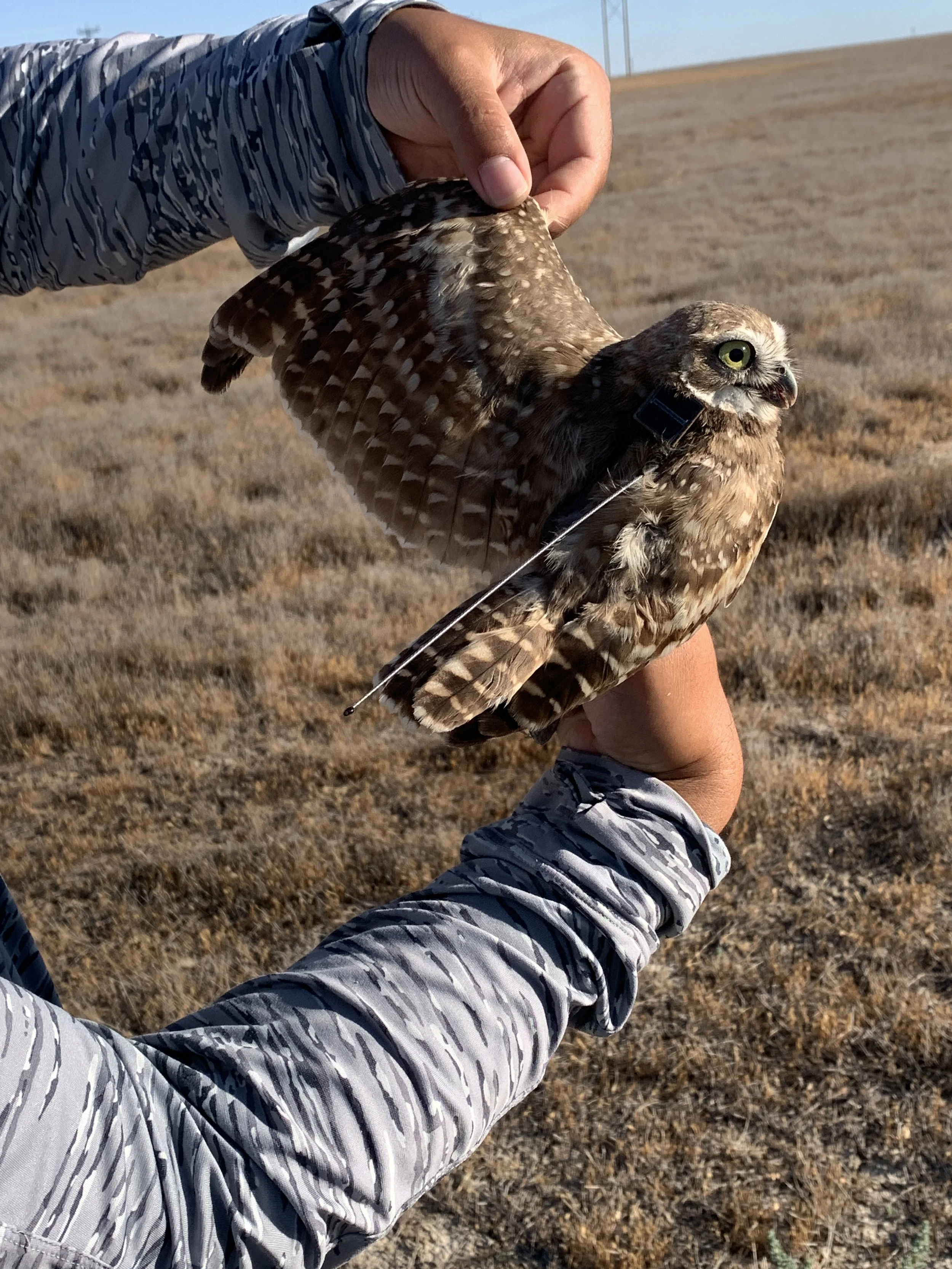
Fledgling burrowing owl recently “tagged” with a small, solar powered satellite transmitter; Photo credit - Steve Alsup
Burrowing Owl Populations in the NCA
Burrowing owls (Athene cunicularia ssp. hypugaea) are one of the most abundant owl species in our NCA. They can be found across the western United States during their breeding season, and they overwinter in southwestern US and Mexico. Unfortunately, researchers have discovered that burrowing owl populations are declining in many of their native breeding areas, including the NCA.
This decline is at least partially caused by habitat loss, with native grasslands being converted into agricultural lands and development for human settlement. Habitat alteration like this can cause the decline of burrowing mammal populations, such as ground squirrels and prairie dogs, which the owls rely on to create the holes and burrows that they use to roost and nest in.
Research Gap in Post-Breeding Season Ecology
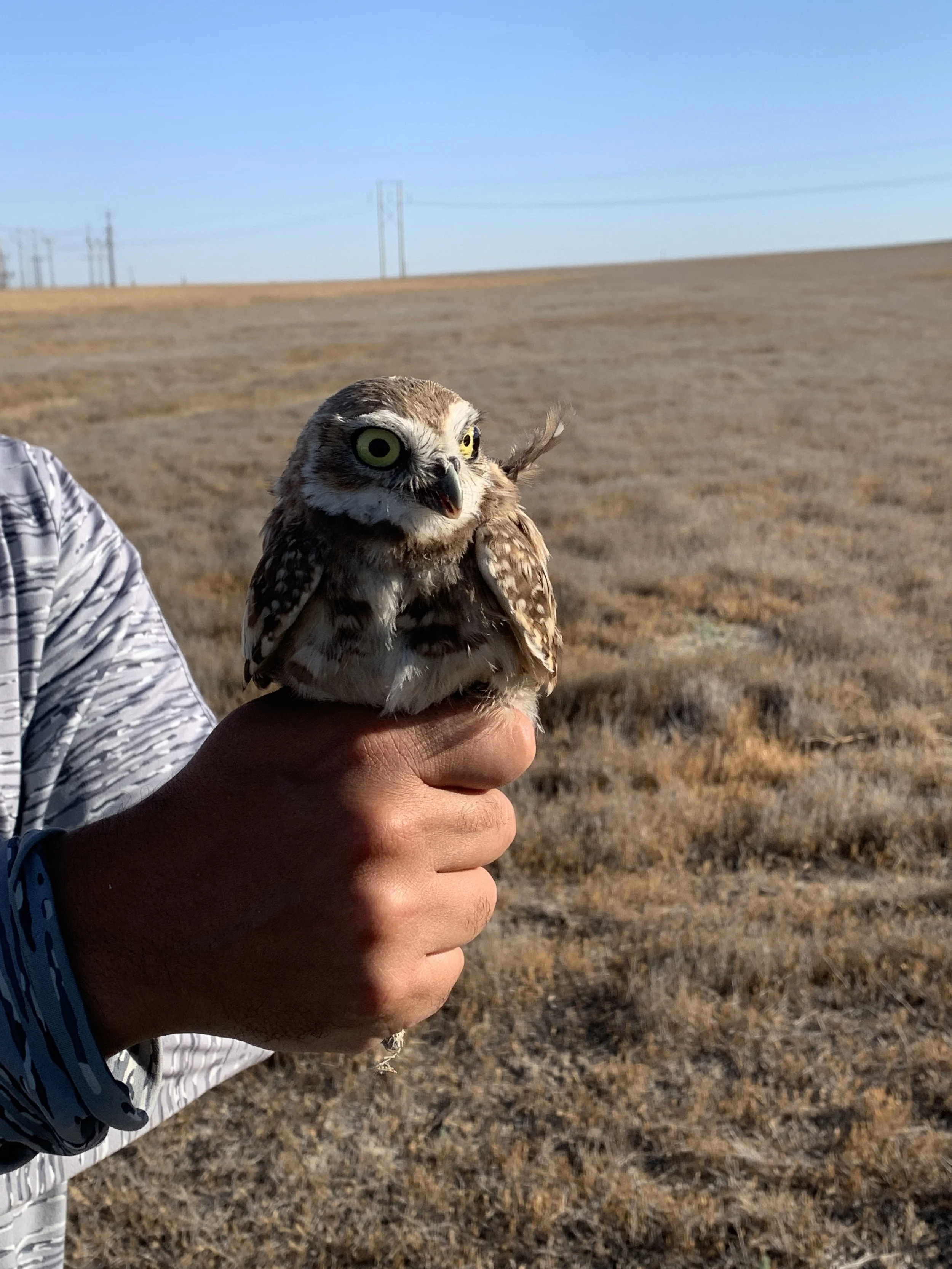
While we know a lot about burrowing owls' ecology and behavior during the breeding season, there is a research gap in post-breeding season ecology. Some burrowing owls conduct post-breeding movements, where they move to a specific home range before migration. However, not all burrowing owls do this. Why? This is one of the key questions Anthony Locatelli is trying to answer.
Anthony Locatelli’s Ph.D Research Objectives
Locatelli is a Ph.D student at the University of Idaho, working at the Conway Lab to better understand post-breeding movements, migration resources selection, and the survival of burrowing owls. His project has four key objectives:
Thoroughly describe post-breeding movements of migrating burrowing owls
Investigate why some burrowing owls make a post-breeding movement prior to migration while others do not
Document resources burrowing owls select during migration
Identify factors that influence survival
By attaching satellite transmitters to hundreds of burrowing owls across the United States and Canada over the past 11 years, researchers from the Conway Lab, including Locatelli have been able to document movements and resources selection after the owls leave their breeding grounds. The results will help inform burrowing owl management efforts.
Joe Weldon (left); Anthony Locatelli (right); Photo credit - Steve Alsup
About the Conway Lab at the University of Idaho
The Conway Lab at the University of Idaho is a part of the USGS Idaho Cooperative Fish and Wildlife Research Unit, which works closely with state and federal agencies to conduct research into fish and wildlife populations in Idaho and throughout the US. The Conway Lab, led by Dr. Courtney Conway, focuses on studies of wildlife ecology, behavioral ecology, and life history evolution, testing how human actions can affect bird and mammal populations.
All birds in these photos were banded under a federally authorized Bird Banding Permit issued by the U. S. Geological Survey, as well as additional state and institutional permits and permissions.
Did you know we have a podcast? Listen to the latest episodes of Dedication Point here
Learn more about the