Planting Event Brings Hope After Devastating Range Fire Sweeps the NCA
In the height of summer, one of the largest wildfires of the year—the Range Fire—burned 26,922 acres within and adjacent to the Morley Nelson Snake River Birds of Prey National Conservation Area (NCA), according to publicly reported figures from the Bureau of Land Management. The fire burned across a significant portion of the NCA, impacting some of the most intact native shrub-steppe habitat in southwestern Idaho.
Among the hardest-hit areas was habitat supporting slickspot peppergrass (Lepidium papilliferum, LEPA)—the only federally listed Threatened plant species within the NCA. An estimated 75 percent of the area managed specifically for this rare species, along with extensive areas of high-quality native habitat, was affected by the fire. The loss represented a major setback for ongoing conservation and restoration efforts within this nationally significant landscape.
Birds of Prey Partnership Comes to the Rescue
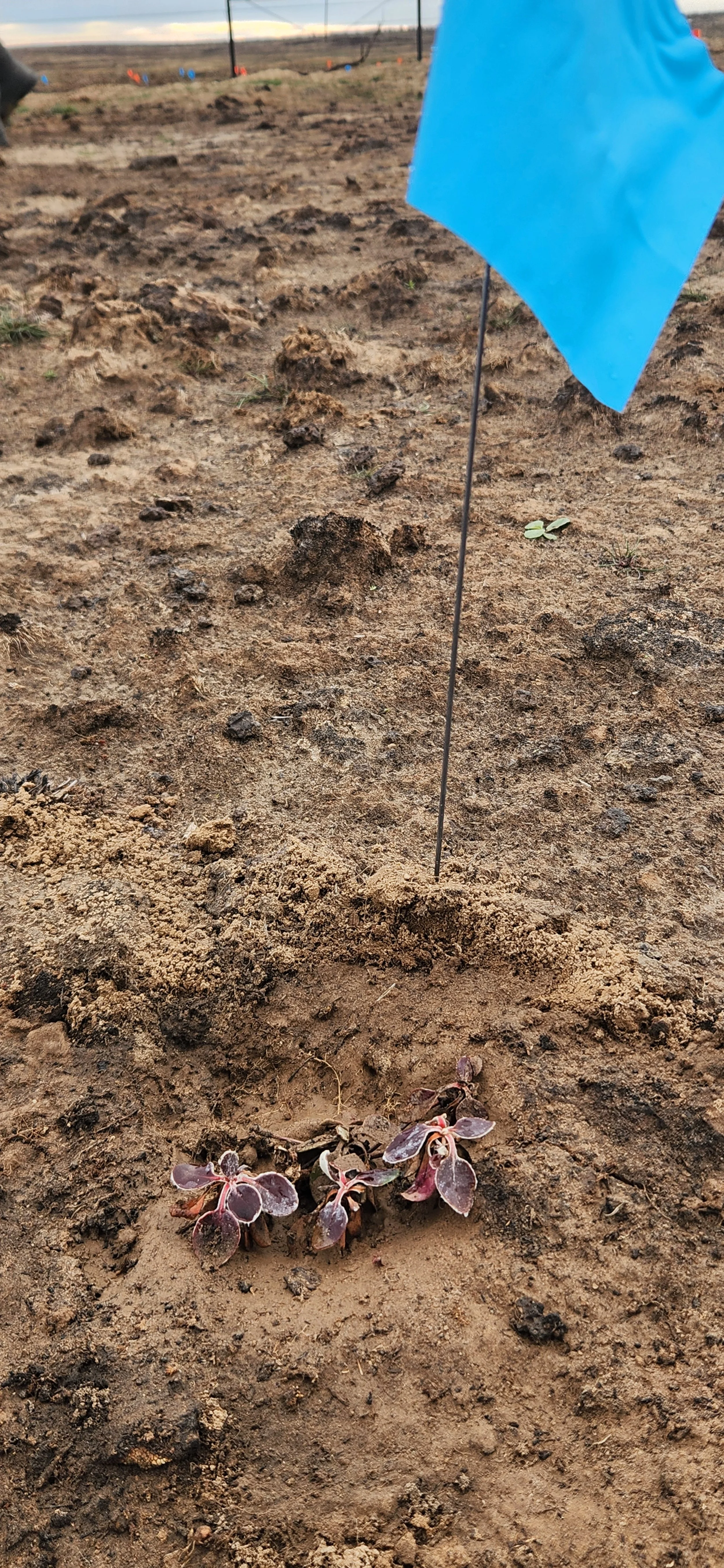
The Birds of Prey Partnership (BOPP), through its Habitat Improvement Program (HIP), was prepared to support post-fire restoration efforts with a reserve of propagated native plants. These included Wyoming big sagebrush, hotrock penstemon, rabbitbrush, and sulphur buckwheat, all grown at BOPP headquarters and available for restoration efforts within and around the NCA.
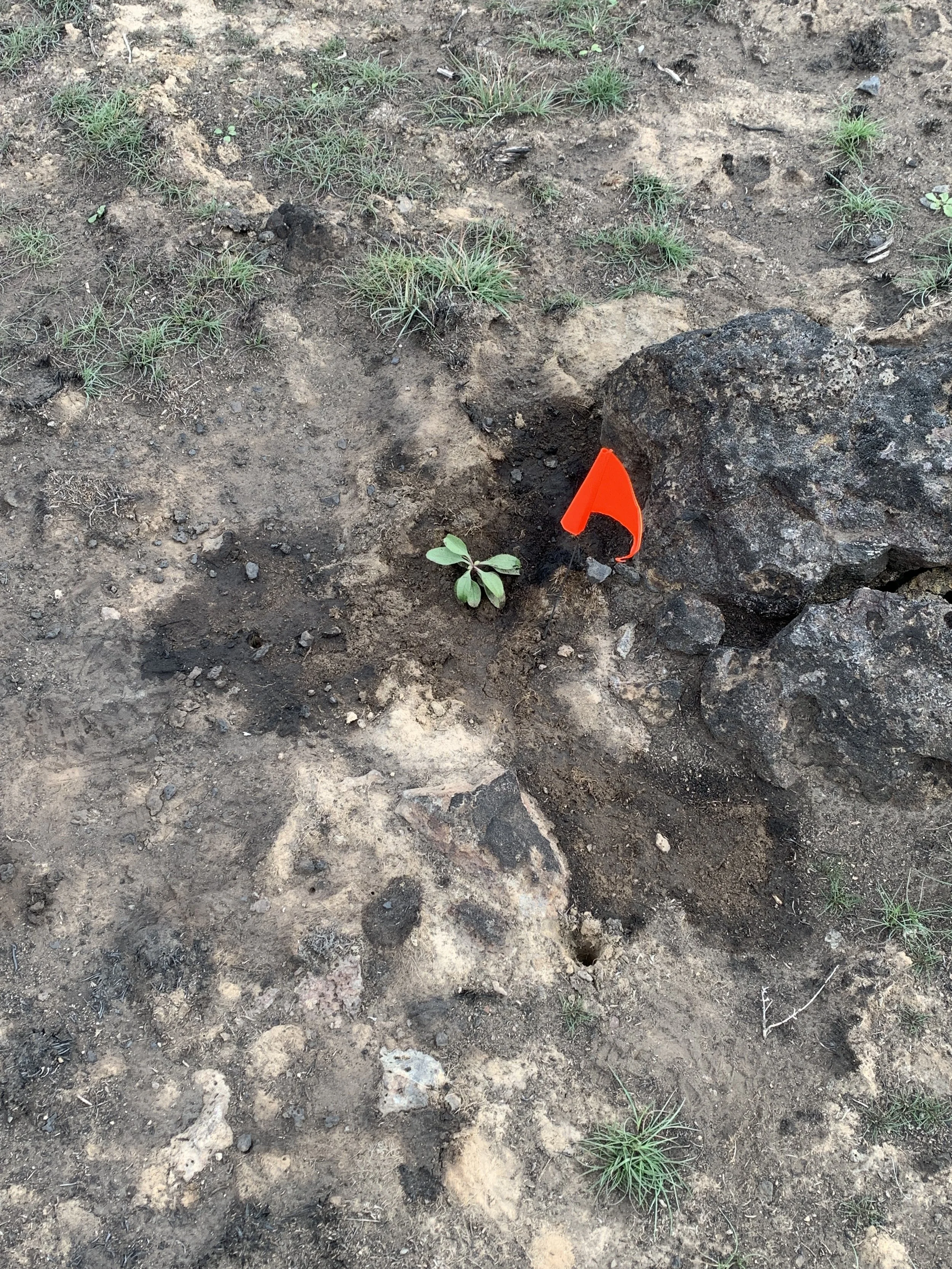
The plants originated from native seed collected through annual community seed-collection events hosted by BOPP Director Steve Alsup. Seeds are gathered from healthy, diverse habitats within the NCA and from similar ecological settings, helping ensure that resulting plants are well adapted to local soils, climate, and microhabitat conditions. This long-standing effort allowed locally adapted native plants to be available when restoration activities could move forward following the Range Fire.
Agency Partners Come Together for a Successful Planting Event
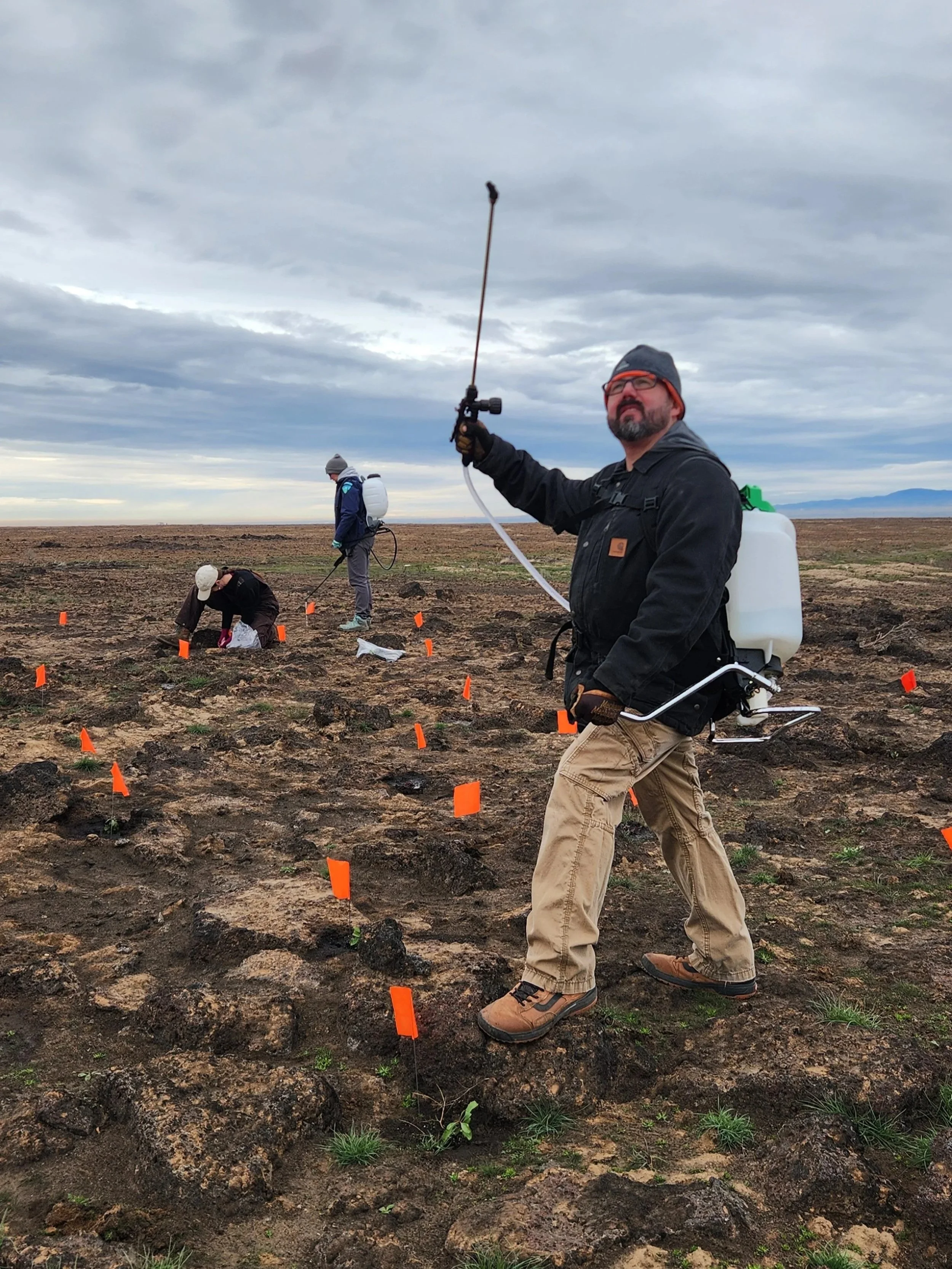
The Birds of Prey Partnership lives up to its name by bringing together agencies invested in the stewardship and long-term preservation of the NCA. Representatives from the Bureau of Land Management, Idaho Army National Guard, U.S. Fish and Wildlife Service, and Idaho Department of Fish and Game joined BOPP staff on a Monday in mid-December to complete the planting effort.
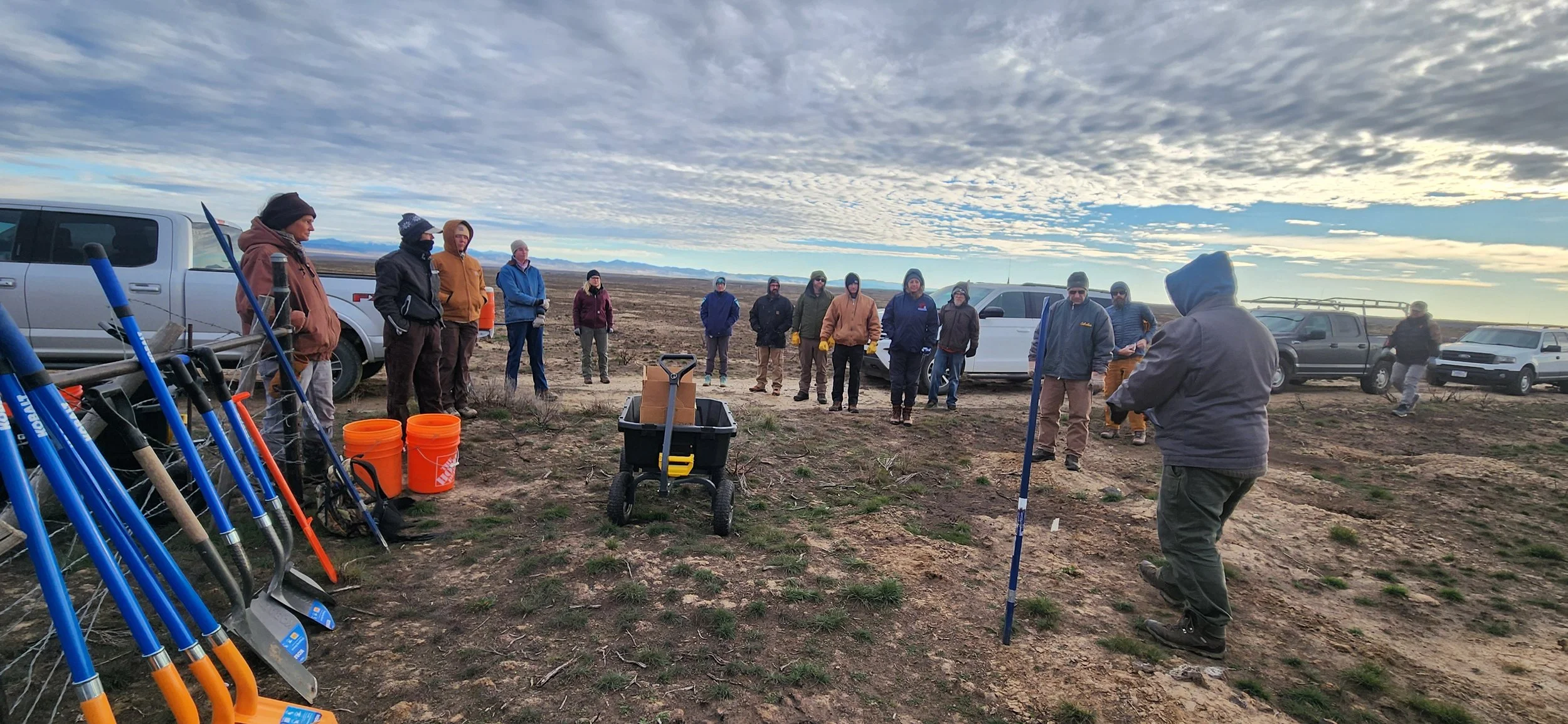
Ideally, the plants would have been installed earlier in the fall; however, an extended government shutdown delayed coordination and site access approvals. Despite the compressed timeline, agency partners stepped up—many taking time off from already full schedules—to ensure the plants were successfully installed before winter conditions set in.
The Results
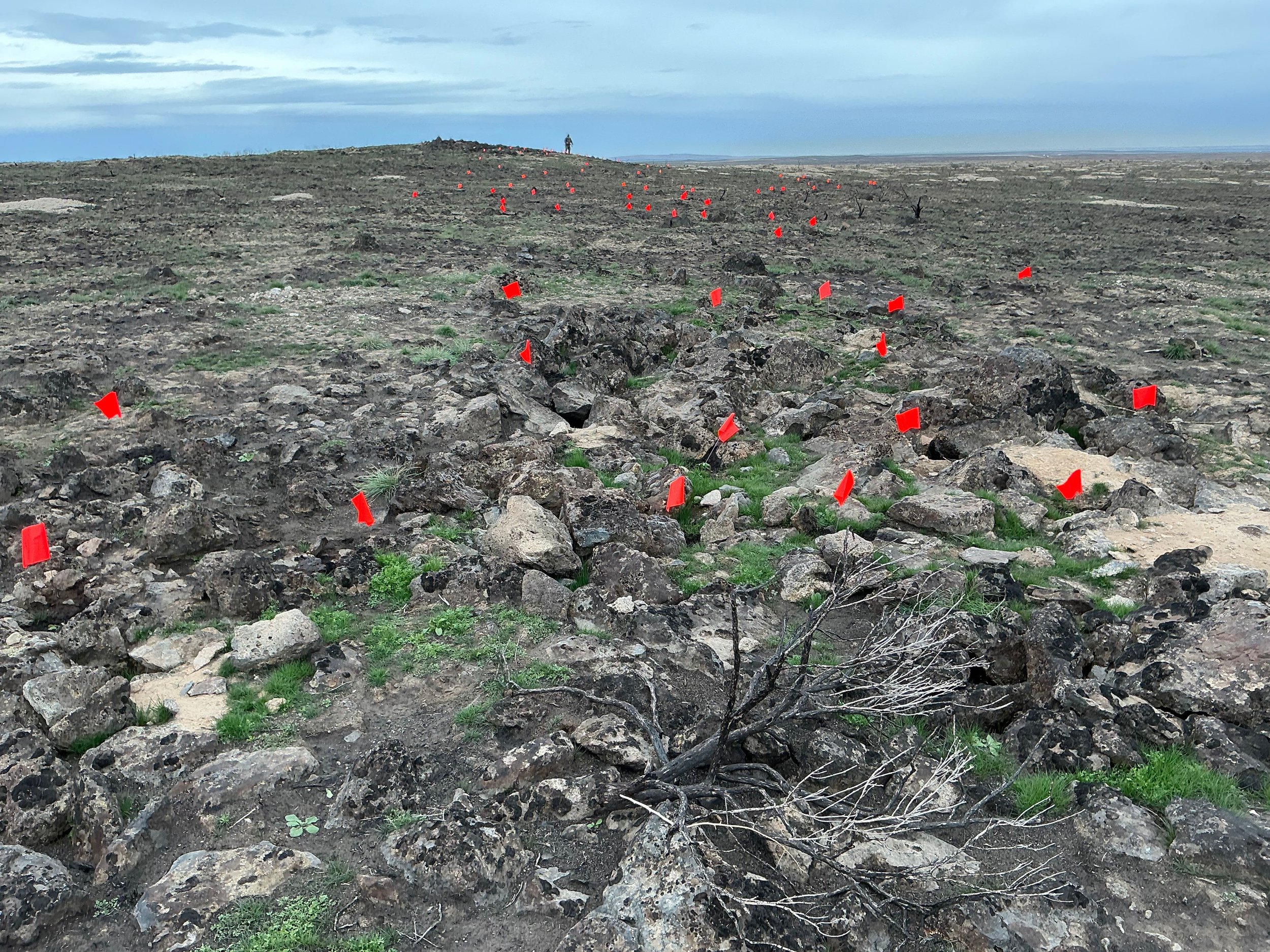
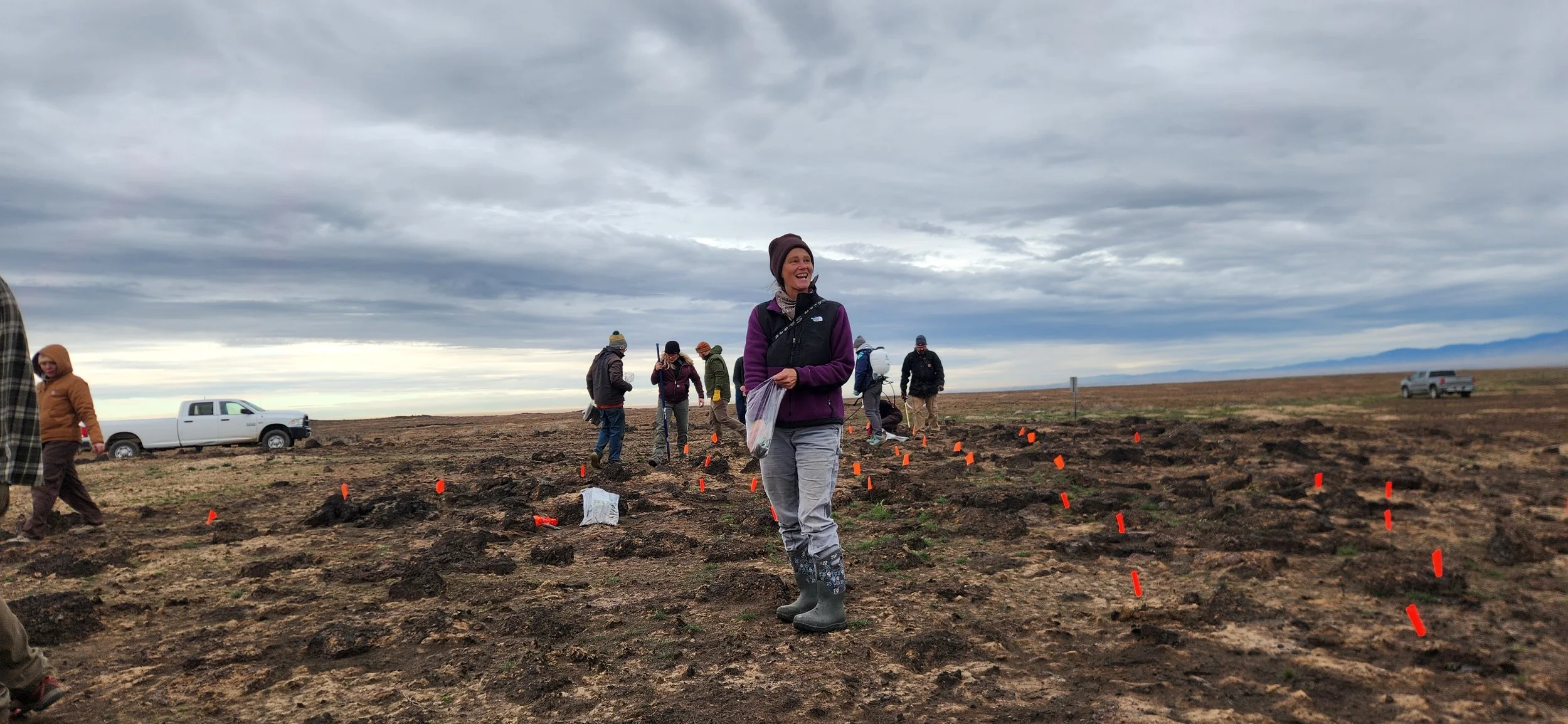
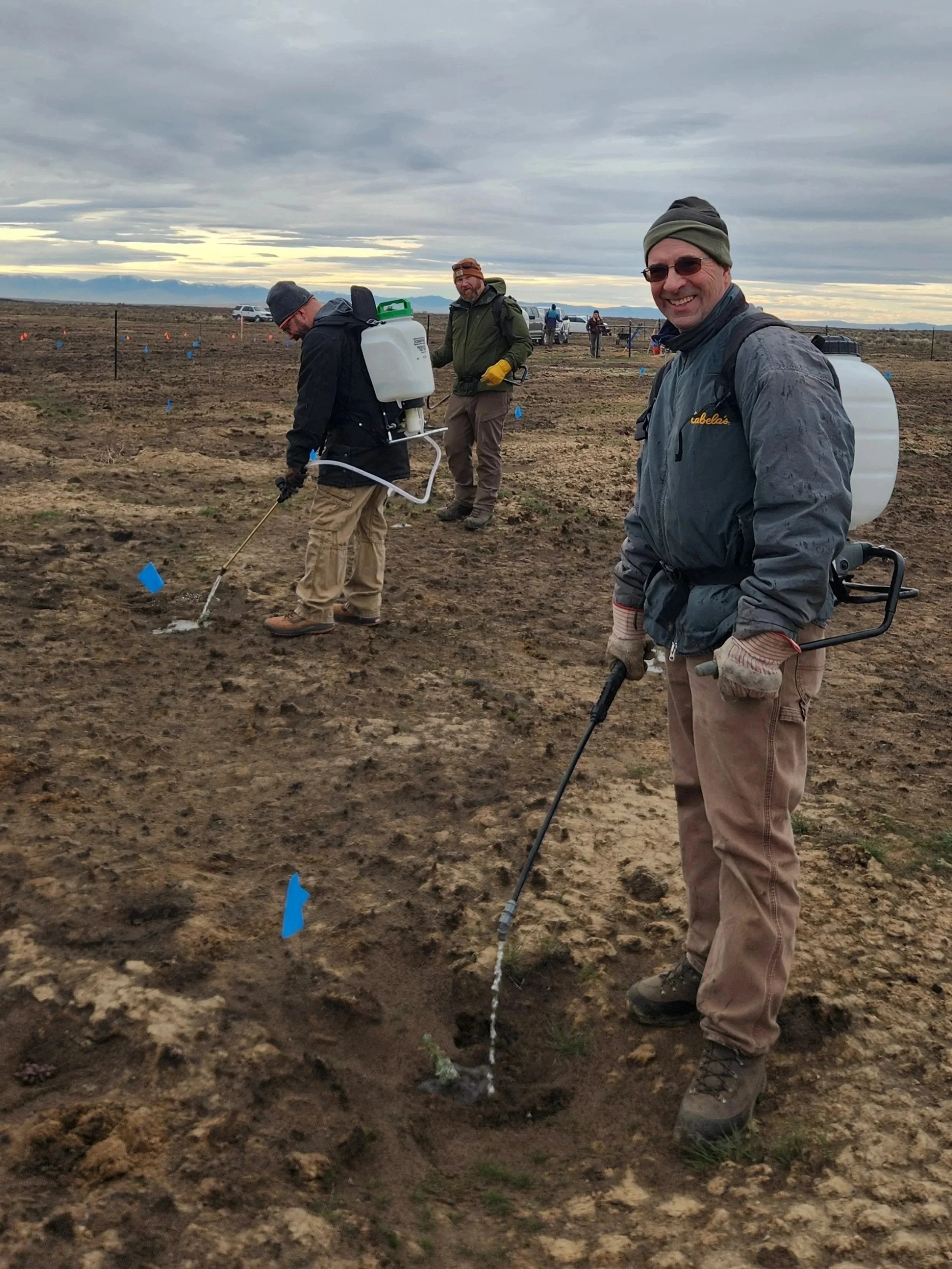
In a single day, through the collaborative efforts of agency partners, 1,018 native plants were installed across two restoration sites. Both sites were selected due to their designation as LEPA exclosures, meaning they are areas closed to grazing and recreational use for the protection of the Threatened slickspot peppergrass.
Approximately 2.94 acres were treated. Plants were arranged in polygon groupings both within and outside of the exclosures, with the intent that, as plants mature, they will fill in gaps and contribute to the recovery of a broader area over time.
What’s Next?
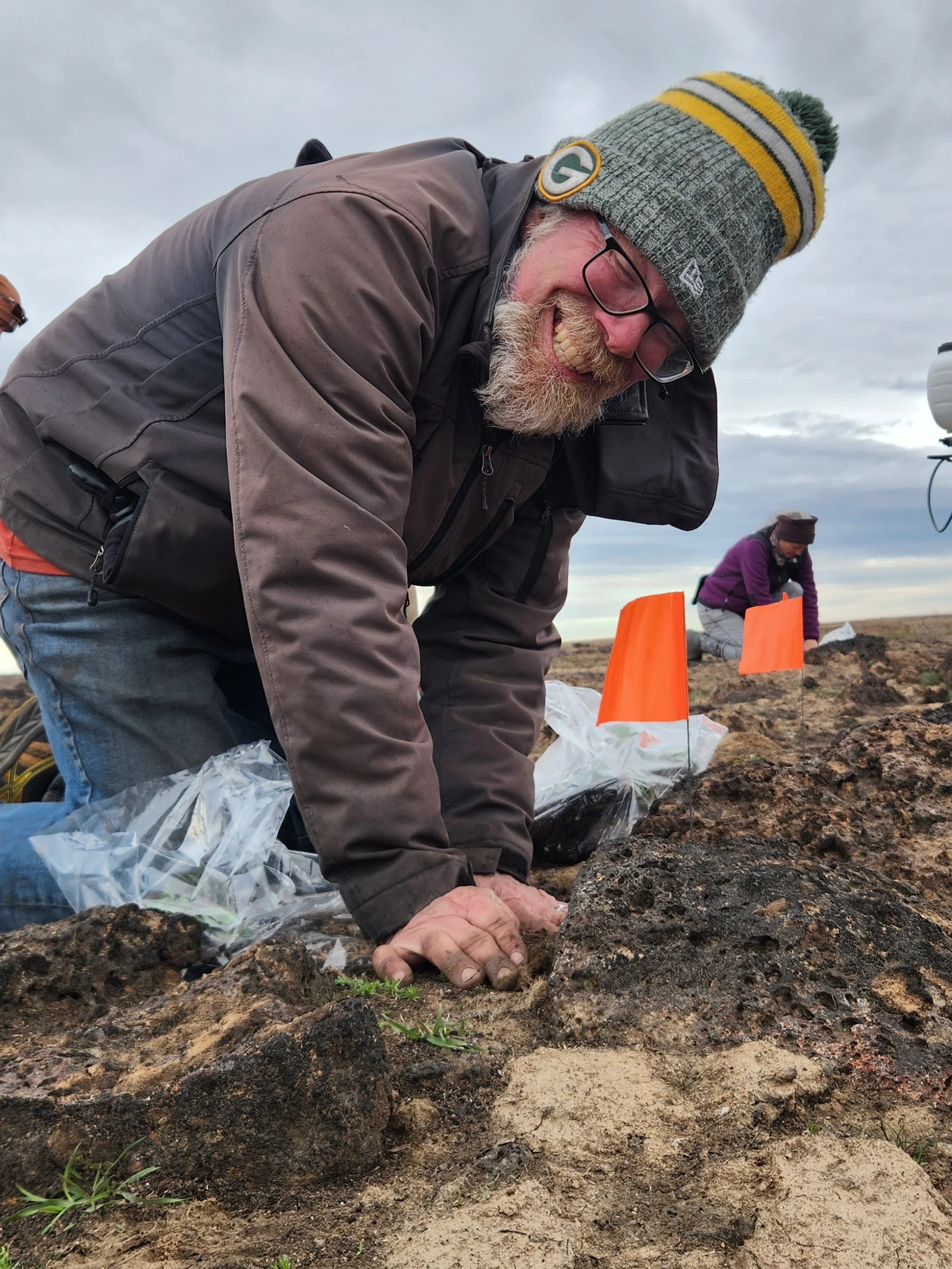
While the planting effort marks an important milestone, restoration work within the NCA is ongoing. The newly installed native plants will be monitored over time by agency partners to evaluate survival, growth, and overall restoration success. Because plantings occurred both inside and outside protective exclosures, this effort will help inform future restoration strategies under a range of site conditions.
Building on this work, the Birds of Prey Partnership’s Habitat Improvement Program (HIP) will continue to support the mission of the partnership by identifying additional opportunities to install locally adapted native plants across the NCA. Through continued collaboration, lessons learned from this project will help guide adaptive management and strengthen post-fire restoration efforts into the future.