
Raptors of the NCA - short-eared owl
By Kateri Bilay
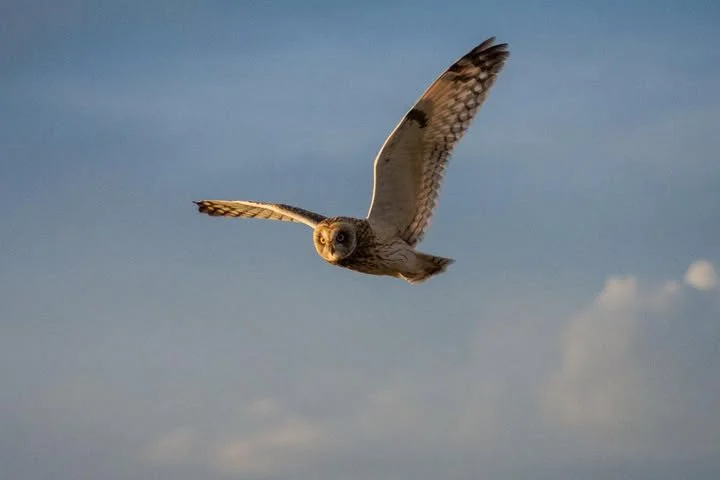
There are many species of owl that utilize the NCA. Some, like the burrowing owl, breed here and are being actively studied to create conservation measures which conserve and improve their habitat. These little owls receive lots of publicity due to their unique habit of nesting underground and their petite, “potato-like” stature. Short-eared owls also reside in the NCA, but are not as conspicuous.
(C) Matthew Danihel
A Daytime Hunter with a Distinctive Flight
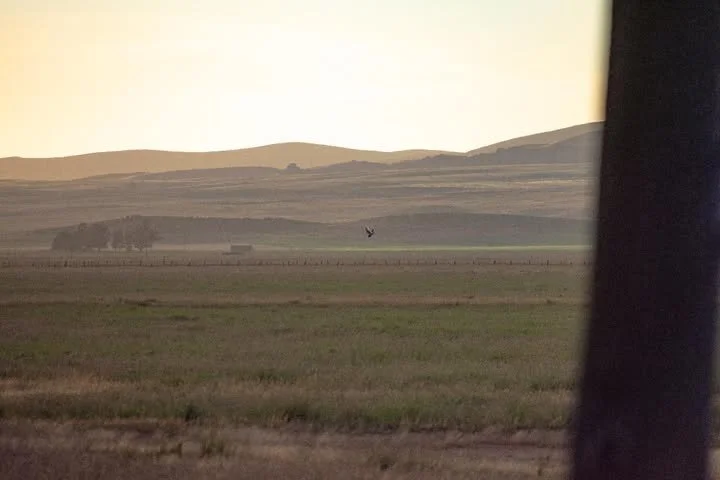
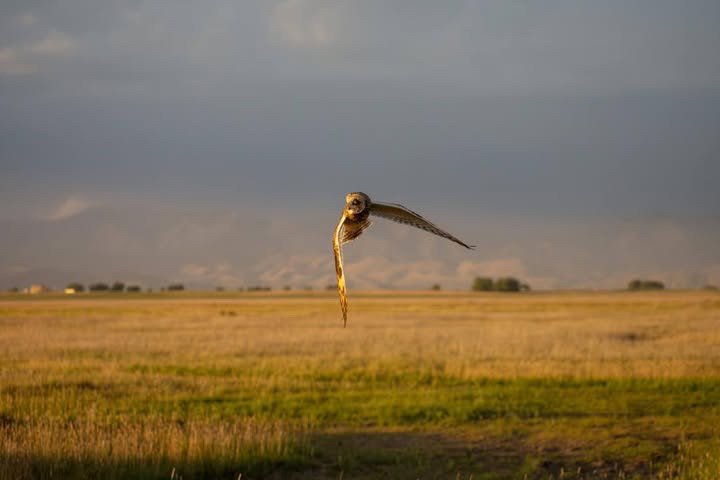
Unlike many owls, they are active during the daytime, especially around dawn and dusk. They can be seen flying low to the ground hunting for rodents amongst grass and shrubs. In flight, short-eared owls have a characteristic moth-like flight which makes them appear particularly buoyant. If spotted above the horizon, they are unmistakable.
(C) Matthew Danihel
Nesting in the NCA
There are sightings recorded on Ebird in all months of the year within the NCA, and those occurring within the nesting season suggest that they breed in the area. These owls are ground nesters and are therefore at higher risk of predation and human disturbance - keep this in mind when recreating in the NCA and stay on-trail to avoid flushing ground nesters off their eggs.
Facultative Migrants and Irruptive Behavior
Although some short-eared owls nest in the NCA, many move into the area as ‘facultative’ migrants, meaning that they follow food sources rather than migrate to a specific destination - a behavior known as ‘obligate’ migration.
When there is a high abundance of small rodents, short-eared owls can be ‘irruptive’, meaning that they congregate in much larger numbers than usual. Short-eared owls are long-distance travelers and are extremely widespread - they are only known to be absent from Antarctica and Oceania. They have colonized many oceanic Islands and can be found in places like Puerto Rico and Hawaii, where they are the only native owl and are called ‘Pueo’ by indigenous peoples.
What Satellite Telemetry Reveals About Their Range
In a paper by James A. Johnson, et al. seasonal movements of these owls were studied using satellite telemetry, which gave insight into their distribution throughout western North America. One of the tracked owls crossed an impressive 850 km of open water across the Gulf of Alaska. These long flights could explain how they have been able to colonize remote islands, and maintain such a wide distribution. It is difficult to estimate the size of each population accurately because of their highly mobile nature.
Despite being found on nearly every continent, this species is experiencing rapid population declines. They depend on large tracts of undisturbed open grassland, meaning that they are susceptible to habitat degradation from fire, open-range cattle grazing, and fragmentation. Therefore, large conservation areas like the Morley Nelson Snake River Birds of Prey NCA are crucial for the protection and survival of these unique and elegant owls. So if you’re planning a visit to the NCA, please be sure to stay on the trails and use safe fire protocols to help preserve their habitat.
(C) Matthew Danihel
Plan a visit to the NCA while the short-eared owls are in town!
We often share visitor sightings in the NCA on our social media - if you’d like yours to feature then send us a message on Facebook or Instagram.